The Endocrine System is instrumental in regulating the mood, growth & development, tissue function, metabolism, sexual function and reproductive process. This system is in charge of the body's slow processes like cell growth. It often works with the nervous system to help the body work properly. Some foundations are the horomones and glands.
Once a horomone is secreted from the gland, it travels from the endrocrine gland through the bloodstream to target the specific cells designed to recieve the message it needs. Along the way, proteins that attach to the horomones that act as carriers that control the amount of horomone that will be avaliable to interact with and affect the target cells. Each horomone has its own unique receptor and the cells only will latch onto a certain receptor.
Horomones are chemical messengers, they transfer information and instructions from one set of cells to the other set of cells.
There are many types of horomones, but each one can only affect the cells that are programed to receive and respond to the messages.
Horomone levels can be influenced by factors such as stress, infections and changed in the balance of fluids and minerals in the blood.
|
Thyroid Gland produces thyroxine and triiodothyronine which controls the rate at which cells burn fuels from the food to produce energy.
There more these horomones enter the blood, the faster chemical reactions occur!
Adrenal Glands have an inner and outer parts. The outer part is called the adrenal cortex and it produces horomones called corticosteriods which influences, regulate salt, and balances water for the body that responds to stress, metabolism, the immune system and sexual developtment.
The inner part is called the adrenal medulla and it produces catecholamines like epinephrine. Epinephrine is also known as adrenaline and it increases blood pressure and heart rate when the body experiences stress, and is used to counteract severe allergic reactions. |
Pineal Gland is located in the middle of the brain. It secretes melatonin, a horomone that helps regulate the wake-sleep cycle.
Gonads is the main source of a sex organ. In males gonads are located in the scrotum, and they secrete horomones called androgens. Which regulaye the body changes associated with sexual development like testosterone. In females they are known as ovaries and they are located in the womans pelvis. These ovaries produce eggs and secrete estrogen and progesterone. Estrogen is involved in the the development of female sexual features such as breats, accumulation of the body fat around the hips, thighs and growth spurt. Estrogen and progesterone are involved in pregnancy and the regulation of the menstrual cycle.
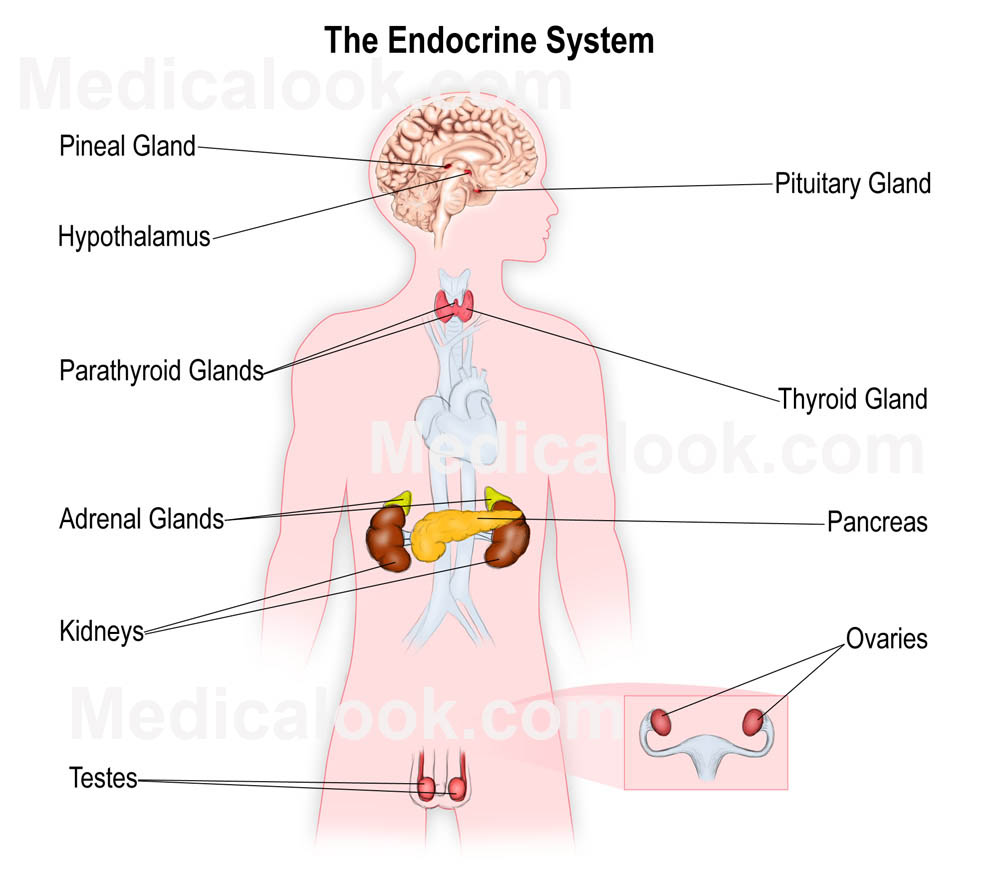
Pancreas produces important horomones such as insulin and glucagon. These two horomones work together to maintain steady levels of glucose in the blood and to keep the body supplied with enough fuel to produce and maintain more energy.
A problem can which can be very dangerous and harmful to our bodies when there is too much or too little of a horomone. Just like Diabetes; types 1 and 2 (one another page, 4-2)
The pancreas secrets insulin in response to the increase in blood sugar when you eat. Most cells have insulin receptors which bind the insulin to the cell. A cell that has insulin attached to it, the cell then is able to activate other receptors. The receptors are designed to absorb glucose from the blood stream and move the glucose into the inside of the cell for energy!!
Insulin is what stores nutrients right after eating by reducing the concentration of glucose, fatty acids and amino acids inside the bloodstream.
